How we work
We got into this because we kept seeing trees ruined
A crew with a bucket truck and a chainsaw can make a tree smaller in an afternoon. Cutting in the wrong place leaves a wound a live oak spends a decade trying to close, and topping a tree buys you a worse tree in five years. Everything below is about the difference.
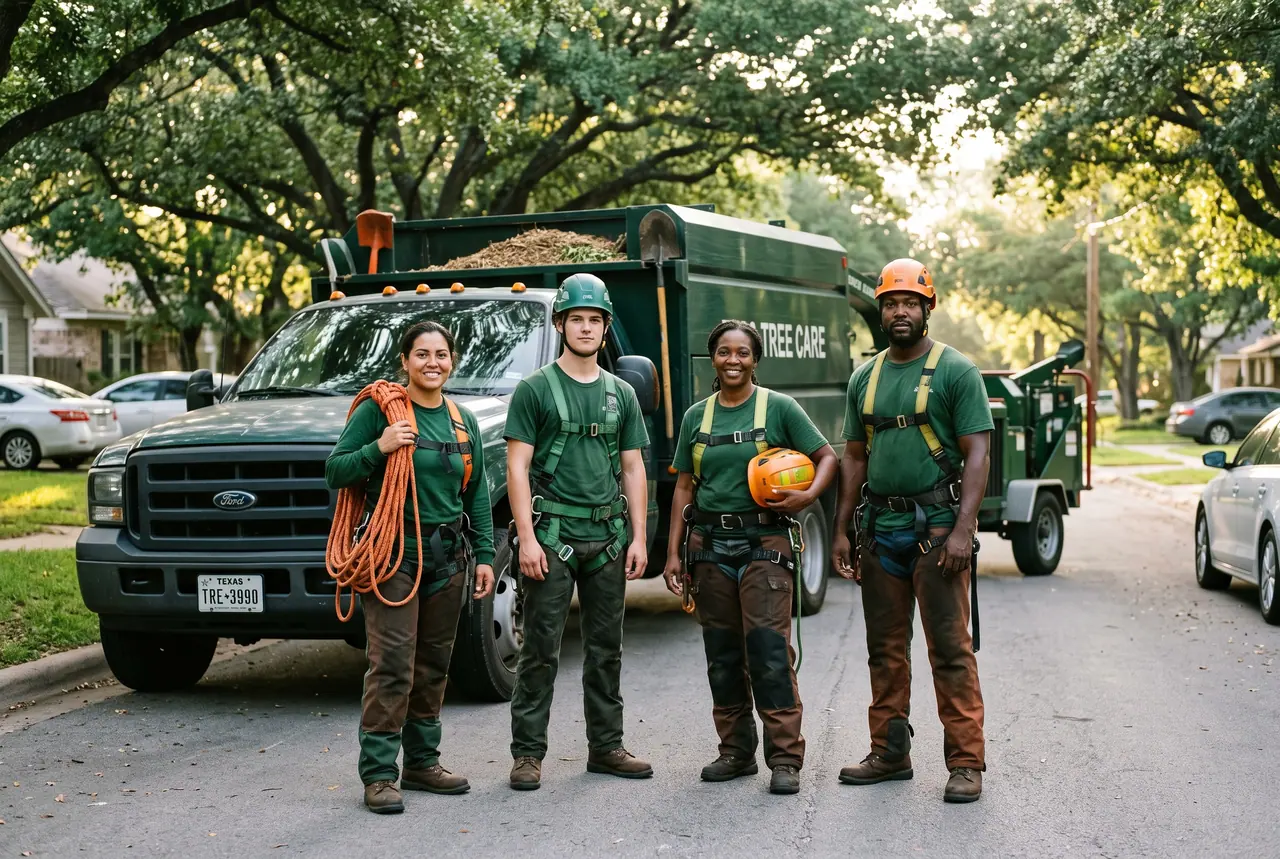
What the work is measured against
Four standards, all of them public documents
A badge tells you somebody passed an exam. A standard tells you what will happen to your tree. These are the four that decide almost every cut on a Central Texas job, and you can read all of them without our help.
- ANSI A300
- The published US standard for tree care operations. It is what defines a proper reduction cut, where a branch collar is, and what counts as an acceptable amount of live crown to remove. It is a document anyone can read, which is what makes it worth citing.
- No topping. Ever.
- Topping violates A300 and is the single most damaging thing routinely done to trees in this region. It triggers a flush of weakly attached regrowth that is more likely to fail than the limb removed, and leaves decay pockets that never close.
- The 25% ceiling
- No more than a quarter of a live crown comes off in one growing season, and considerably less on a mature or stressed tree. A neglected tree gets restored across two visits a year apart rather than butchered in one.
- Wounds painted in beetle season
- Any oak cut between February and June gets pruning paint within minutes of the cut. It is the single most effective thing anyone can do to avoid transmitting oak wilt, and it costs nothing.
Why we work this way
The bet was that people would rather have the correct answer than the fast one
Topping sells. It is fast, it looks dramatic to a homeowner, and the tree does not send the bill for about five years — usually in a storm, usually through a roof. Watching that happen to perfectly good live oaks is why this company exists in the form it does.
The alternative is slower and harder to sell: decide what the tree can afford to lose, remove that, and stop. Explain why the answer is sometimes nothing. Put every tree in writing before a saw starts. It costs a conversation on the front end and saves an argument on the back end.
Central Texas makes that stance easy to justify. Oak wilt moves through neighbourhoods here every season, and the droughts of 2011 and 2022 killed trees that had stood since before the houses around them existed. There is no margin for a bad cut in a canopy already under that much pressure.
So: climbers on rope and saddle, not spikes, on any tree that is staying. Reduction to a suitable lateral, not a stub. Wounds painted on the spot in beetle season. And a willingness to tell you your tree is fine, which is the only thing on this page that actually costs us anything.
Who turns up
Four roles, described rather than named
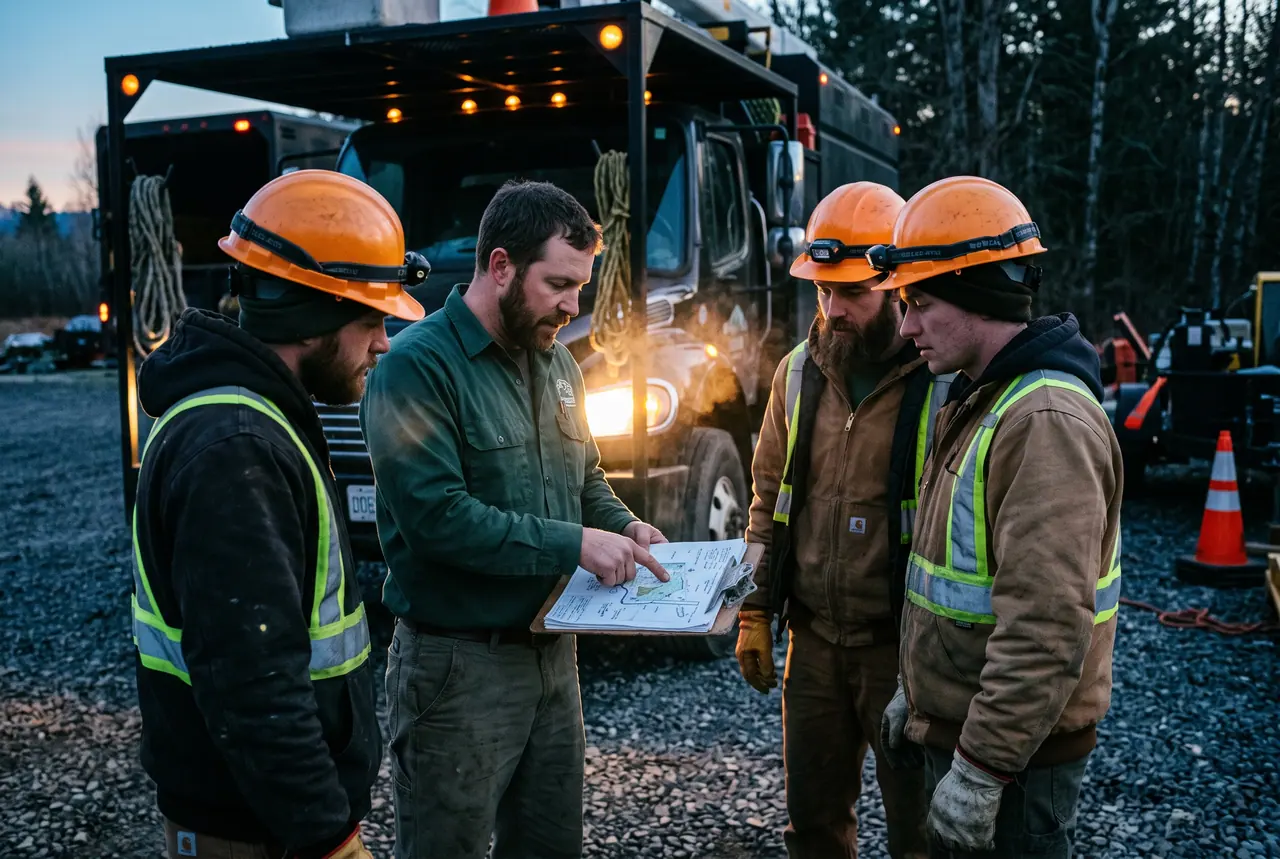
An earlier version of this page introduced three people with photographs of nobody, biographies and a certificate number. They were invented, so they are gone. What a real company should tell you is which of these four you are talking to at any point, and this is what each one is for.
The arborist who quotes
Walks the property with you before anything is priced, and writes the scope. This is the person who tells you a tree does not need the work you rang about, which is the whole reason the visit is free.
The climber
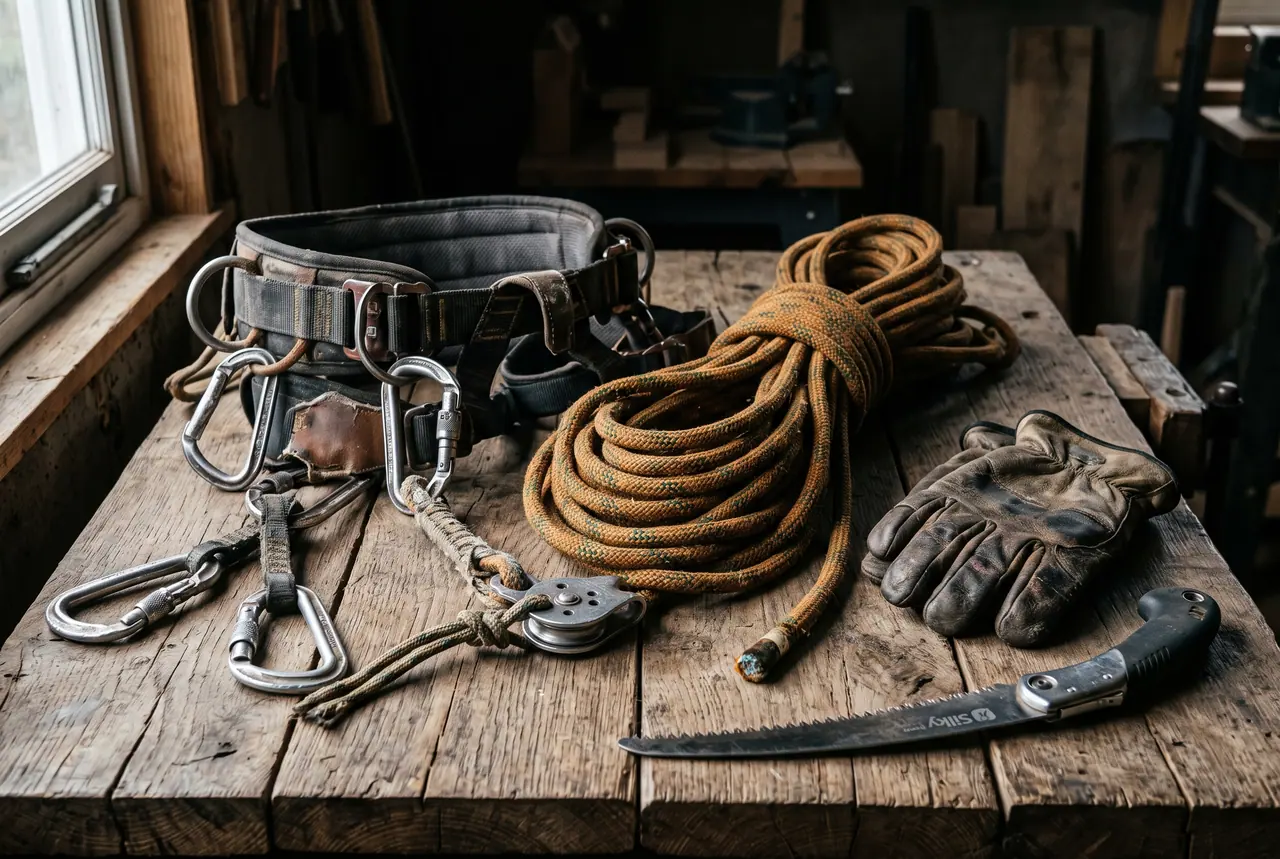
Works on rope and saddle rather than from a bucket, because a limb over a roof has to be reached from above and cut precisely. Spikes are never used on a tree that is staying — the wounds are permanent entry points for decay.
The ground crew
Runs the rigging, the chipper and the drop zone. Most of what makes a removal safe happens on the ground, and most of what makes a site look untouched afterwards happens in the last forty minutes.
Whoever answers at 3am
A crew member, not an answering service. They will ask what is touching what, whether anybody is hurt and whether you can see a wire, and they will tell you honestly where you sit in the queue after a widespread storm.
A note about this site
This is a demonstration built to show design and search work, so Summit Tree Care is not a real company. The phone number sits inside the 555-0100 to 555-0199 range reserved for fiction. The yard address is invented and no coordinates are published anywhere. There are no reviews, ratings, licence numbers, certifications or insurance policies on this site, because a demonstration cannot hold any of them, and a fabricated one in a real registry format is worse than none at all.
Everything about arboriculture is accurate and can be relied upon: oak wilt behaviour and the February-to-June pruning window, ANSI A300, the 25% crown limit, the City of Austin 19-inch and 24-inch thresholds, and the difference between Edwards Plateau limestone and Blackland Prairie clay. Those were the parts worth keeping.
Questions
What you can actually check
Why does this site not list any certifications?
Because it is a demonstration site and Summit Tree Care is not a real company, so it cannot hold a certification, an accreditation, a licence or an insurance policy. An earlier version of this page listed four, including a certificate number in the format Texas actually issues. A made-up number in a real format is not made safe by being made up — it can collide with a working arborist’s real one. It was removed rather than reworded.
So what should I check on a real company?
Ask for a certificate of insurance issued directly to you by their insurer, not a photocopy handed over by the crew, and check that it names general liability and workers compensation. Ask which parts of ANSI A300 apply to your job. Ask for a written scope naming each tree. Ask who files the permit and whether the fee is charged at cost. Every one of those is checkable.
Why does workers compensation matter so much?
Because if a climber with no cover is injured on your property, the exposure can find its way to your homeowners policy. It is the line people skip when comparing quotes, and it is the one that can cost the most. An uninsured crew is genuinely cheaper right up until somebody is hurt in your yard.
Do tree companies use subcontractors?
Many do, and it is not automatically a problem — but it changes who is insured for what, so ask. Crane work in particular is usually a hired machine and operator working alongside the tree company’s own climber. Ask whose insurance covers which part of the day before the crane arrives.
Want a straight answer about your tree?
We will walk your property, tell you what it needs, and tell you if the honest answer is that it needs nothing at all.
- Free on-site visit, usually within 2 to 3 days
- Every tree named in writing before we start
- No obligation and no pressure to book