The short version
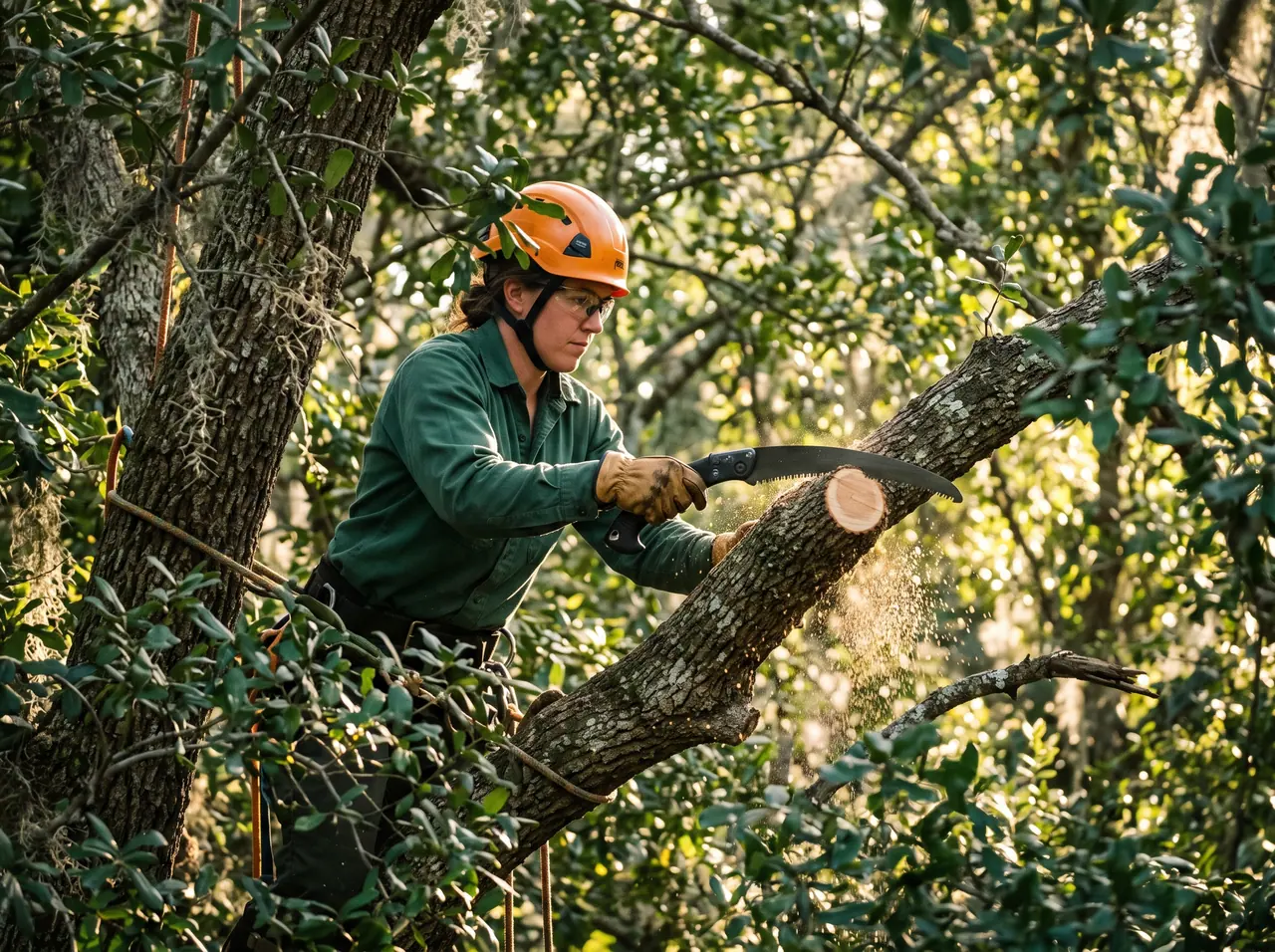
Prune oaks in Austin between July and January. Leave them alone from February through June.
That is not a stylistic preference or an old wives tale. It is a direct response to the life cycle of the beetles that spread oak wilt, and it is the single most consequential piece of tree care advice specific to this region.
Why those months
Sap-feeding nitidulid beetles feed on fungal mats produced under the bark of oak-wilt-killed red oaks. They are drawn to the smell of fresh sap, and a new pruning cut is effectively an advertisement. Their activity peaks in spring.
Cut an oak in April and you have opened a wound at exactly the moment the vector is most abundant and most motivated. Cut the same oak in September and the risk drops enormously.
What to do if you cannot wait
Sometimes a limb fails over a driveway in May and it simply has to come off. In that case:
- Make the cut properly, at the branch collar
- Paint the wound immediately, within minutes rather than at the end of the day
- Paint every cut, including small ones, and including the stub left on the tree
Pruning paint is discouraged in general arboriculture because it interferes with the tree natural compartmentalisation process. Central Texas oaks during beetle season are the exception, and it is not a close call. Any paint works. Latex housepaint is fine.
The 25% rule
Whatever month you prune, do not remove more than a quarter of the live crown in a single season, and take considerably less from a mature or stressed tree.
Leaves are how a tree produces energy. Strip too many and the tree responds with a panic flush of fast, weakly attached water sprouts. Those sprouts are exactly what you do not want on a limb hanging over your roof, and the tree has spent stored reserves it may not get back in a drought year.
What good pruning actually removes
In priority order:
- Dead, dying, diseased and broken wood. Almost always the right call, in any season, and where most of the immediate risk to people and property sits.
- Crossing and rubbing limbs. Two branches grinding against each other create a wound that never closes.
- Weak attachments. Especially co-dominant stems with included bark, which are the classic Central Texas failure point.
- Over-extended limbs. Shortened back to a suitable lateral branch to reduce leverage, not cut to a stub.
- Clearance. Roof, gutter, driveway and walkway, cut to the distances your insurer actually asks for.
Notice what is not on the list: making the tree smaller because it looks big.
Topping, and why no reputable company will do it
Topping means cutting main limbs back to stubs with no regard for branch structure. It is rejected by ANSI A300, by the ISA, and by every arborist worth hiring.
It does three things, all bad. It leaves large wounds in positions the tree cannot compartmentalise, opening the trunk to decay. It triggers dense regrowth attached only to the outer wood, far weaker than the limb removed. And it removes so much foliage at once that the tree is left in energy deficit.
A topped tree is more dangerous five years later than it was before the work, not less. When a tree genuinely needs to be smaller, the correct technique is crown reduction, cutting back to a suitable lateral branch that can take over as the new terminal.
Other species, other timing
The February to June restriction is about oaks and oak wilt specifically. For everything else in Central Texas:
- Cedar elm, pecan, hackberry: late winter dormancy is ideal, though these tolerate pruning across a wide window
- Crepe myrtle: late winter, and please do not commit the annual mutilation locals call crepe murder
- Ashe juniper: any time, it is not fussy
- Fruit trees: late winter before bud break
- Anything storm damaged: immediately, regardless of species or season
The cheapest tree work there is
If you have young trees, prune them now. Structural pruning between roughly three and fifteen years after planting establishes one dominant leader and well-spaced scaffold limbs while the cuts are still small enough to close in a season.
Correcting a co-dominant stem on a twenty-foot tree costs a couple of hundred dollars. Dealing with the identical defect at fifty feet over a roof costs several thousand and may need a crane.